
Skip to Content

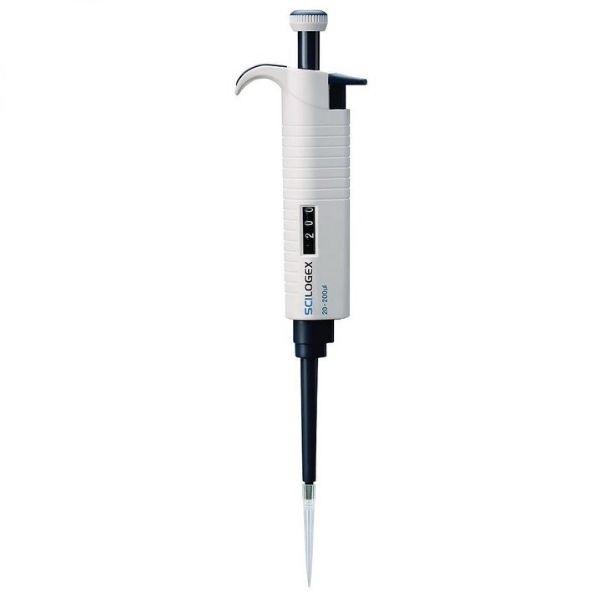
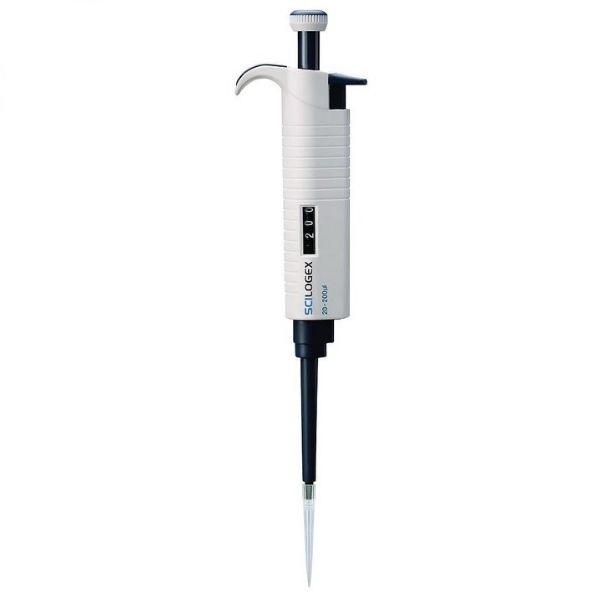
MicroPette Single Channel Variable Pipettors in 9 fully adjustable volume sizes

https://www.scilogex.com/web/image/product.template/1705/image_1920?unique=eecbaba

142.00 142.00 In stock
In Stock 1 Year Warranty

Weight: 0.66 kg

178.00

Currently Out-of-Stock

  • Vol. R. (1-Ch. Var P. [MicroPette™])

This combination does not exist.

In Stock 1 Year Warranty


For more information please call +1 (860) 436-9221 or email us at [email protected]

Get the best price
for your organization today

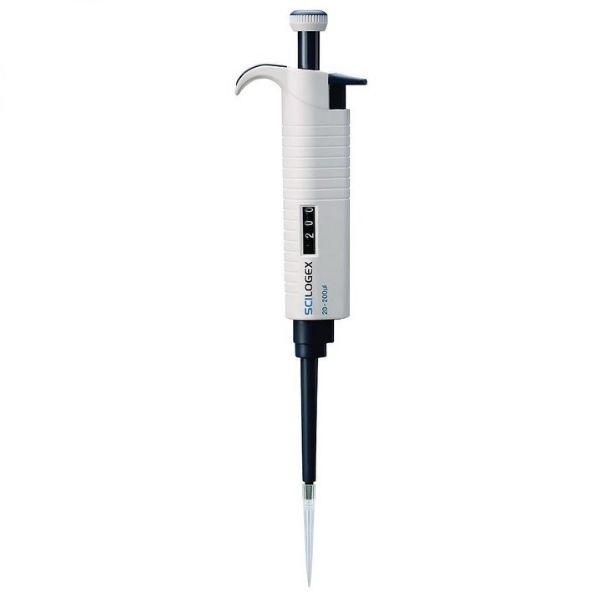
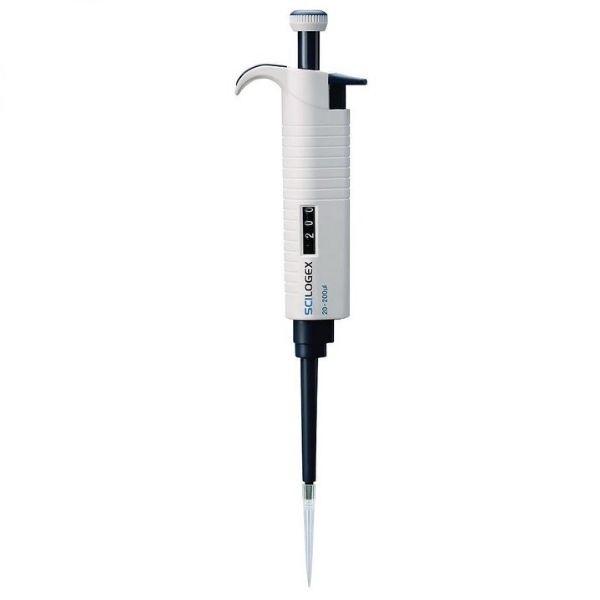
Single Channel Adjustable Pipettor

Your samples need accurate, repeatable transfers and your budget doesn’t need to . The Scilogex MicroPette is a single channel adjustable volume pipette available in 9 volume ranges from 0.1µL to 10mL, starting at $202.

 9 volume ranges cover 0.1µL to 10mL

One consistent pipette family for your full volume workflow

ISO 8655 calibrated, individual certificate included 

Meets the same calibration standard as Eppendorf and Gilson - at a lower purchase price

Works with universal pipette tips - no proprietary tip lock-in

Buy tips from any supplier rather than paying brand premiums

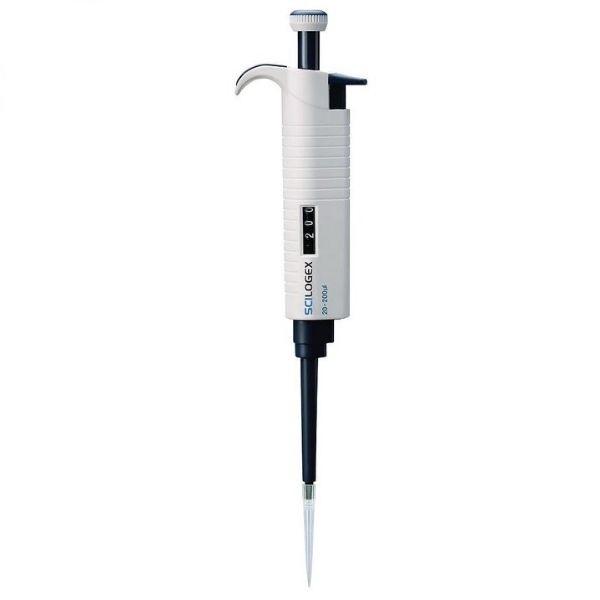
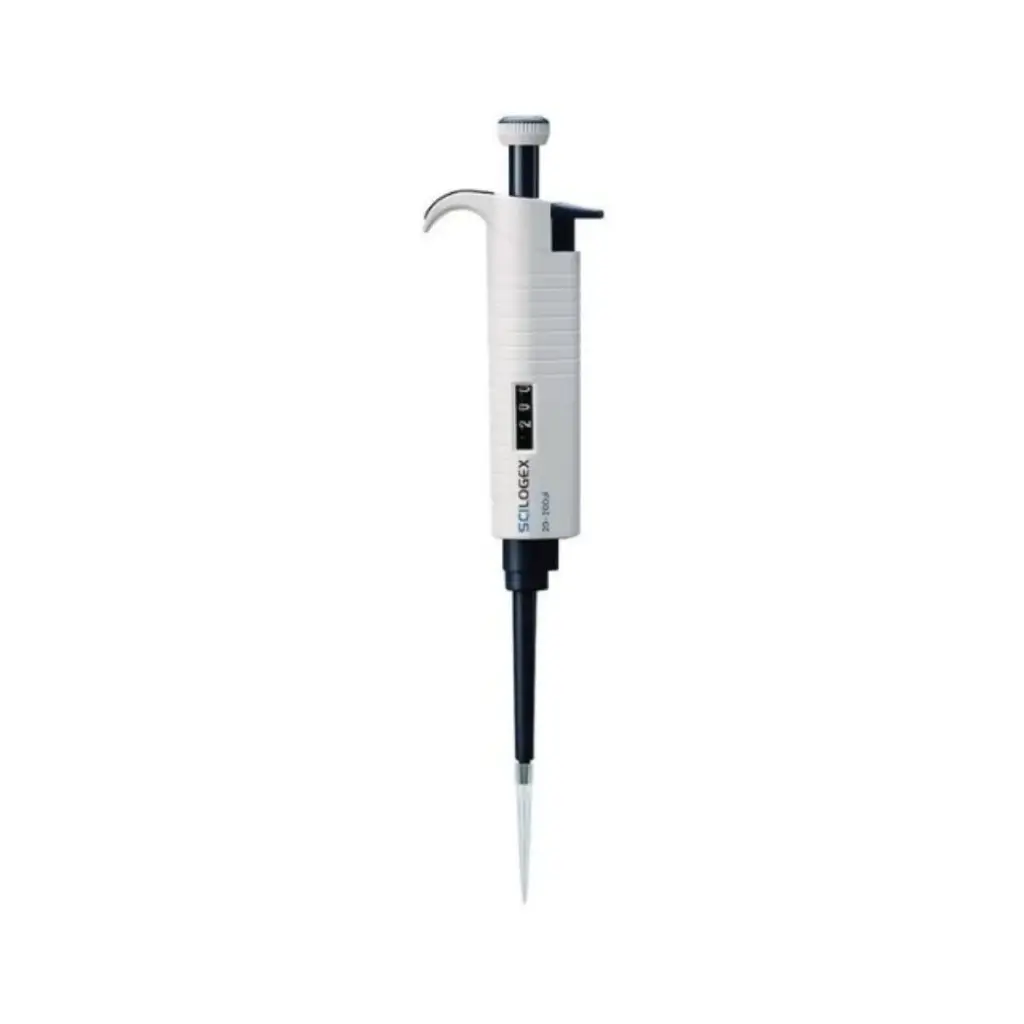
Large volume display window with integral tip ejector

Read the set volume at a glance without squinting


Scilogex MicroPette single channel adjustable volume pipette at a glance

  What is this product?

The Scilogex MicroPette is a manual single channel variable pipettor available in 9 overlapping volume ranges from 0.1µL to 10mL. Volume is set by rotating the thumb plunger. Each unit is ISO 8655 calibrated and ships with an individual calibration certificate.

   Who is it for?

Bench scientists, lab technicians, and lab managers in molecular biology, cell culture, clinical diagnostics, microbiology, and chemistry labs who need reliable, accurate liquid transfers without paying premium brand prices. Also suitable for new labs building out their pipette inventory on a controlled budget.

   What does it do?

Aspirates and dispenses precise liquid volumes - from sub-microliter work like qPCR setup and ELISA at the small end, through standard 200µL and 1000µL transfers, up to large-volume work at 5mL and 10mL. Covers virtually all routine single-channel pipetting across a standard lab workflow.

   What are the benefits in your workplace?

Calibrated accuracy you can document. Universal tip compatibility means no forced purchasing of branded tips. The integral tip ejector works in narrow tube formats. Volume is re-adjustable at any time. Each unit arrives with a calibration certificate, which satisfies documentation requirements in regulated environments.

   What problems does it solve?

Replacing broken or out-of-calibration pipettes without overpaying. Equipping a new bench without spending the entire equipment budget on pipettes. Reducing the per-pipette cost when buying multiples for a team. Avoiding tip supply lock-in from proprietary tip systems.

   What are your next steps?

Choose your volume range and add to cart, or contact us for volume pricing on orders of five or more units.

Whether you're setting up PCR reactions, preparing dilution series, processing clinical samples, or dispensing reagents into assay plates, a single channel adjustable volume pipette is the tool you'll reach for most often. The MicroPette delivers consistent transfers in the formats your work actually requires - without building in costs for brand prestige you don't need.


Models suitable for…

Molecular biology and genomics
Clinical and diagnostic labs
Cell culture and microbiology

Chemistry and analytical labs

 Why the Scilogex MicroPette single channel adjustable volume pipette makes sense for most labs

 This is for scientists who care about hitting their target volume, not about what logo is on the barrel

 Your PCR reaction doesn't care what brand dispensed the polymerase into it. It cares whether you hit 1µL at 1µL, or 100µL at 100µL. The MicroPette is calibrated to ISO 8655 - the same international standard that governs Eppendorf, Gilson, and Rainin pipettes. The calibration certificate that ships with your unit is documentation you can put in your binder.

Why choose this single channel pipette for your lab?

  • ISO 8655 calibrated from the factory. Every MicroPette goes through gravimetric testing with distilled water at 22°C before it ships. You receive an individual calibration certificate with the unit.
  • Nine volume ranges in one consistent product family. The same thumb plunger mechanism, the same tip ejector design, and the same adjustment feel across all nine models. When you train a new person on one, they know how to use all of them.
  • Universal tip compatibility. The MicroPette works with standard universal pipette tips. You're not locked into a single supplier's proprietary tip line, which gives you flexibility in sourcing and often lower tip costs.
  • Integral tip ejector designed for narrow tube access. The ejector geometry lets you seat and eject tips without repositioning your grip, which matters when you're working quickly or in confined spaces.
  • Volume is recalibrateable in-house. A calibration tool is supplied with the unit. When your service schedule comes around, you don't have to send it out - you can adjust it yourself.
  • Large volume display window. Set your volume, confirm it visually, and get to work. It's a small thing that eliminates a source of quiet errors when you're moving fast.


Where are our pipette fillers being used today? (and does this sound like your application?)

Molecular biology and genomics labs

PCR setup, gel loading, DNA/RNA quantification, and sequencing prep all require accurate sub-microliter to milliliter transfers. The MicroPette's 0.1µL to 10mL range covers everything from template additions at 0.5µL through full-volume gel loading at 20µL and standard 1mL reagent transfers. The calibration certificate is useful documentation when you're working under any quality system.


Clinical and diagnostic labs

Urine chemistry, serology, hematology prep, and routine sample dilutions run through a high volume of single-channel transfers every day. Labs that run these workflows want pipettes that hold calibration across repetitive use and that don't require a service call when it's time for recalibration. The MicroPette covers the 20µL to 1000µL range most heavily used in clinical work, and the recalibration tool means your in-house technician can handle routine adjustments.


Cell culture and microbiology

Media preparation, reagent additions, and sample transfers in sterile environments rely on single channel pipettes for precision that multichannel pipettes can't handle. The MicroPette's standard shaft geometry works with most filtered and unfiltered tips on the market, giving you flexibility in selecting tips appropriate for aerosol-barrier work.


Chemistry and analytical labs

Preparing standards, making dilutions, dispensing into cuvettes, and transferring samples into analytical instruments all require volume accuracy that affects your data quality downstream. At volumes from 0.1µL to 10mL, the MicroPette covers the transfers analytical chemists make routinely, with the accuracy specifications appropriate for the volume range.


Teaching and training labs

Universities and vocational programs need pipettes that can take some handling variation while staying in calibration. The MicroPette's recalibratability means an instructor can verify and adjust a unit between semesters without sending a fleet of pipettes to a service center. The lower per-unit cost also makes it practical to have enough pipettes on hand for full class sections.


New lab setups and budget-driven procurement

When a PI is setting up a new lab or a lab manager is equipping additional bench positions, the cost of outfitting four or five pipette stations adds up quickly. At $223 per unit for most volume ranges, the MicroPette lets you stock the bench positions your team actually needs rather than compromising on numbers to stay in budget.


 How does this compare to Eppendorf, Gilson, and Thermo Fisher single channel pipettes?

Labs often default to Eppendorf Research Plus, Gilson PIPETMAN, or Thermo Fisher Finnpipette out of habit. Here's an honest look at where the MicroPette fits and where it doesn't. 

 Where the MicroPette matches the premium brands

Calibration standard

All four pipette lines - Eppendorf, Gilson, Thermo Fisher, and Scilogex MicroPette - are calibrated to ISO 8655. The standard is the same. Your PCR template doesn't know which brand dispensed it.

 Individual calibration documentation

Each MicroPette ships with its own calibration certificate, the same as you'd expect from premium brands. This satisfies quality system requirements in regulated and GLP environments.

Volume range coverage​

The MicroPette's nine models span 0.1µL to 10mL - the same working range covered by the equivalent Eppendorf and Gilson lineups.

In-house recalibration 

A calibration adjustment tool is included. You don't need a service contract or a depot repair to recalibrate.

 Where the premium brands have a genuine advantage​

Proprietary low-retention tips

Eppendorf's LowBinding tips and Rainin's LTS low-retention system reduce surface adhesion for viscous, volatile, or surface-active samples. If tip wetting is a meaningful source of error in your application, those systems are worth evaluating. The MicroPette works with universal tips, which perform well for the vast majority of applications but don't replicate low-retention performance.

Electronic-assist and programmable modes

If you're doing high-volume repetitive pipetting and need repeat-dispense, adjustable aspiration speed, or motor-assisted plunger action to reduce strain, you need an electronic pipette. The MicroPette is manual.

Validated SOP compatibility

If your protocols are already validated on a specific brand and revalidation costs exceed the savings on equipment, stay where you are. Revalidation is a real cost.

 When it makes sense to choose the MicroPette​

Situation Why MicroPette fits
Replacing worn or broken pipettes Same ISO 8655 standard, lower replacement cost
Equipping multiple bench positions $223 per unit keeps the total manageable
New lab builds on a budget Stock the full volume range without exhausting your equipment budget on pipettes
Teaching and training environments Lower per-unit cost, in-house recalibratable
Any routine single-channel work ISO 8655 calibration is ISO 8655 calibration

  For routine single-channel work in molecular biology, clinical, or chemistry labs, you are paying for the brand name at the premium tier - not for meaningfully better calibration.


How do I choose a single channel pipette volume range?

The most common mistake is buying a single pipette to cover too wide a range, which forces you to work at the extremes of its volume scale where accuracy is lower. The MicroPette line's nine overlapping ranges are designed so you can match the pipette to your actual working volume.

1. Match the pipette range to your most frequent working volume
Most pipettes perform best in the upper two-thirds of their range. A 100-1000µL pipette set to 100µL is at the bottom of its range and less accurate there than a 20-200µL pipette set to 100µL. The rule: choose the smallest range whose maximum still covers your common working volume.
Volume you're pipetting most often Volume range to choose
0.1-2µL (template additions, micro-reactions) 0.1-2.5µL
0.5-8µL (small PCR additions, enzyme aliquots) 0.5-10µL
5-18µL (gel loading, small transfers) 2-20µL
10-45µL (dilutions, small reagent additions) 5-50µL
20-90µL (ELISA, plate-based assays) 10-100µL
50-180µL (general transfers, dilution series) 20-200µL
200-900µL (standard reagent transfers, most common volume) 100-1000µL
1-4.5mL (media, buffer additions) 1-5mL
2-9mL (large buffer transfers, culture additions) 2-10mL


2. Think about how many different volumes your bench work requires

If your daily work regularly spans a 10µL transfer and a 500µL transfer, you need two pipettes - you can't cover both well with one instrument. Many labs find that three pipettes (a small, a mid-range, and a large) cover 90% of their transfers. Knowing this helps you decide how many units to purchase versus how many ranges to maintain.​

3. Consider your tip inventory
Because the MicroPette works with universal tips, you can standardize on a single tip format (or two - a 10µL and a 1000µL) and have them work across your pipette lineup. This simplifies purchasing and reduces the chance of using the wrong tip format for a volume range.
4. Decide whether you need single-channel or multichannel
The MicroPette is a single channel pipette for one-at-a-time transfers. If you're running 96-well plates regularly, a multichannel pipette will save significant time. Single channel pipettes remain useful for plate work too - adding standards, master mix preparation, and transfers that don't match the 8- or 12-channel row layout still require single-channel work.


MicroPette specifications

Cat. No. Volume range Volume increment Accuracy (±%) Precision (±%) Test volumes
712111019999 0.1-2.5µL 0.05µL 2.50/3.00/12.00 2.00/3.00/6.00 2.5µL / 1.25µL / 0.25µL
712111049999 0.5-10µL 0.1µL 1.00/1.50/2.50 0.80/1.50/1.50 10µL / 5µL / 1µL
712111059999 2-20µL 0.5µL 0.90/1.20/3.00 0.40/1.00/2.00 20µL / 10µL / 2µL
712111069999 5-50µL 0.5µL 0.60/0.90/2.00 0.30/0.60/2.00 50µL / 25µL / 5µL
712111089999 10-100µL 1.0µL 0.80/1.00/3.00 0.15/0.40/1.50 100µL / 50µL / 10µL
712111099999 20-200µL 1.0µL 0.60/0.80/1.00 0.15/0.30/1.00 200µL / 100µL / 50µL
712111149999 100-1000µL 5.0µL 0.60/0.70/2.00 0.20/0.25/0.70 1000µL / 500µL / 100µL
712111179999 1-5mL 50µL 0.50/0.60/0.70 0.15/0.30/0.30 5000µL / 2500µL / 1000µL
712111339999 2-10mL 100µL 0.60/1.20/3.00 0.20/0.30/0.60 10000µL / 5000µL / 2000µL

Notes on the specification table:

  • Accuracy and precision values are listed at maximum / mid-range / minimum test volumes.
  • Calibration performed with distilled water at 22°C per ISO 8655-2:2002.
  • Each unit ships with an individual calibration certificate.
  • Weight: 0.66 kg per unit.
  • Warranty: 1 year.


Included with each MicroPette:

  • Single channel variable volume pipettor
  • Individual calibration certificate (ISO 8655)
  • Calibration adjustment tool


Choose your volume range and add to cart


 What determines single channel pipette price?

Calibration standard and documentation

Pipettes calibrated to ISO 8655 with individual certificates cost more to produce than uncertified units. The MicroPette meets this standard at a price that reflects efficient manufacturing rather than brand overhead.

​Volume range​

Pipettes for very small volumes (sub-microliter work) require tighter manufacturing tolerances and more precise components, which is reflected in the slightly higher price for the 0.1-2.5µL model.

​Tip system​

Pipettes designed around proprietary tip systems (Eppendorf Combitips, Rainin LTS, Gilson Tipack) add per-use cost to the tip consumables and typically increase the price of the pipette itself. Universal tip compatibility keeps both the pipette and tip costs lower.

Electronic vs. manual​

Electronic pipettes with variable speed, repeat-dispense modes, and ergonomic motors cost significantly more than manual pipettes. If your application doesn't require these features, you're paying for them unnecessarily.

​Brand infrastructure​

Premium brands support global service networks, recalibration programs, and marketing operations. These costs are embedded in the purchase price. The MicroPette doesn't carry that overhead.

Warranty terms​

The MicroPette includes a 1-year warranty. Premium brands typically offer 1-2 years. For a manual mechanical instrument, the warranty period is less determinative of total cost than the recalibrateability of the unit - a pipette you can adjust in-house costs less to maintain over its life than one that requires depot service.
Single channel pipette frequently asked questions

Product and purchasing questions

The MicroPette is available in nine volume ranges: 0.1-2.5µL, 0.5-10µL, 2-20µL, 5-50µL, 10-100µL, 20-200µL, 100-1000µL, 1-5mL, and 2-10mL. Each is a separate product ordered by catalog number.

Each MicroPette ships with the pipettor, an individual calibration certificate per ISO 8655, and a calibration adjustment tool for in-house recalibration.

 The MicroPette comes with a 1-year warranty covering manufacturing defects under normal use.

The MicroPette is designed for universal standard pipette tips. You are not limited to a proprietary tip brand. Most standard 10µL, 200µL, and 1000µL tips from common suppliers fit correctly. If you have questions about compatibility with a specific tip brand you already use, contact us.

 Yes. Contact us for pricing on orders of five or more units. Labs outfitting multiple bench positions often find volume pricing meaningful on pipette purchases.

Eppendorf Research Plus and Gilson PIPETMAN single channel pipettes typically run $200-300+ per unit depending on volume range and supplier. The MicroPette starts at $202.50 for the 0.1-2.5µL model and is $223 for most other volume ranges. The ISO 8655 calibration standard is the same. The difference in cost reflects brand overhead, not calibration quality.

 The MicroPette is affordable, not cheap. Cheap pipettes are not calibrated to a traceable standard, often lack individual documentation, and use imprecise volume-setting mechanisms. The MicroPette is ISO 8655 calibrated, ships with a certificate, and is adjustable in-house. You're not paying for Eppendorf's brand operations or Gilson's marketing department. That's what makes it affordable.

Technical and calibration questions

ISO 8655 is the international standard governing the design, construction, and performance of piston-operated volumetric apparatus - including pipettes. Calibration to ISO 8655-2:2002 means the pipette has been tested gravimetrically (by weighing dispensed water at a defined temperature) and meets specified accuracy and precision tolerances. It's the same standard Eppendorf, Gilson, and Rainin use. All MicroPette units pass this calibration at the factory and ship with documentation.

Yes. A calibration adjustment tool is included with each pipette. You can perform in-house gravimetric calibration verification and adjustment without sending the pipette to a service center. Standard practice is to check calibration annually or more frequently if the pipette is heavily used or has been dropped.

Accuracy refers to how close the dispensed volume is to the set volume - systematic error. Precision refers to how consistently the pipette delivers the same volume across repeated aspirations from the same setting - random error. Both are expressed as a percentage at multiple test volumes (maximum, mid-range, and minimum within the range). High precision with lower accuracy means the pipette consistently delivers the same volume, but that volume may be slightly off the set point - correctable by recalibration. Poor precision means inconsistent results regardless of calibration.

Generally, no. Accuracy and precision specifications are tighter toward the upper portion of a pipette's range and looser at the minimum volume. For the 100-1000µL pipette, for example, you'll get better results at 800µL than at 100µL. If you regularly need 100µL transfers, use a 20-200µL pipette set to 100µL - it's within the accurate range of that instrument. The volume selection guide on this page shows the recommended working ranges for each model.

Standard laboratory practice is annual calibration verification, with more frequent checks for high-use pipettes or pipettes used in regulated environments. Many quality systems require documented calibration records on a defined schedule. Because the MicroPette ships with a calibration tool, you can perform and document this in-house without depending on an outside service interval.

The product documentation does not specify autoclavability for the assembled pipette. The lower barrel (shaft) assembly should be verified with the product manual before any autoclaving attempt. For sterility requirements in cell culture work, standard practice with most manual pipettes is to autoclave tips in sealed bags and use appropriate pipetting technique rather than autoclaving the pipette body itself.

Application questions

Yes. The 0.1-2.5µL, 0.5-10µL, and 2-20µL models cover the volume range used for template, primer, and master mix additions in standard PCR and qPCR setup. Use filtered/barrier tips for PCR work to prevent aerosol contamination.

Yes. The 10-100µL and 20-200µL models are appropriate for ELISA work. Standard 96-well plate ELISA volumes typically run 50-200µL per well. For high-throughput plate work where you're dispensing the same volume into many wells, a multichannel pipette is more efficient for row/column transfers, but a single channel is still needed for standards, controls, and preparation steps.

The ISO 8655 calibration with individual documentation certificates means the MicroPette can be incorporated into regulated workflows with traceable calibration records. Whether it meets your specific regulatory requirements (GLP, GMP, CLIA, etc.) depends on those requirements - review the calibration documentation against your quality system's standards.

For the 0.1-2.5µL model, use tips designed for the sub-microliter range - standard 10µL tips from most suppliers work, but look for tips specifically rated for 1µL or less if you're working at the very bottom of the range. Gel-loading tips can also work for very small volumes in specific applications.


Additional Resources and Information

Downloadable PDFs


MicroPette 
Pipettors manual


Electronic & Manual
Pip​ettors brochure

Ordering Information:

Cat. No.:
712111019999

Accuracy (±%) :
2.50/3.00/12.00

Increment :
0.05ul

Precision (±%) :
2.00/3.00/6.00

Test Volume :
2.5ul/1.25ul/0.25ul

Volume Range :
0.1-2.5ul

Cat. No.:
712111049999

Accuracy (±%) :
1.00/1.50/2.50

Increment :
0.1ul

Precision (±%) :
0.80/1.50/1.50

Test Volume :
10ul/5ul/1ul

Volume Range :
0.5-10ul

Cat. No.:
712111059999

Accuracy (±%) :
0.90/1.20/3.00

Increment :
0.5ul

Precision (±%) :
0.40/1.00/2.00

Test Volume :
20ul/10ul/2ul

Volume Range :
2-20ul

Cat. No.:
712111069999

Accuracy (±%) :
0.60/0.90/2.00

Increment :
0.5ul

Precision (±%) :
0.30/0.60/2.00

Test Volume :
50ul/25ul/5ul

Volume Range :
5-50ul

Cat. No.:
712111089999

Accuracy (±%) :
0.80/1.00/3.00

Increment :
1.0ul

Precision (±%) :
0.15/0.40/1.50

Test Volume :
100ul/50ul/10ul

Volume Range :
10-100ul

Cat. No.:
712111099999

Accuracy (±%) :
0.60/0.80/1.00

Increment :
1.0ul

Precision (±%) :
0.15/0.30/1.00

Test Volume :
200ul/100ul/50ul

Volume Range :
20-200ul

Cat. No.:
712111149999

Accuracy (±%) :
0.60/0.70/2.00

Increment :
5.0ul

Precision (±%) :
0.20/0.25/0.70

Test Volume :
1000ul/500ul/100ul

Volume Range :
100-1000ul

Cat. No.:
712111179999

Accuracy (±%) :
0.50/0.60/0.70

Increment :
50.0ul

Precision (±%) :
0.15/0.30/0.30

Test Volume :
5000ul/2500ul/1000ul

Volume Range :
1-5mL

Cat. No.:
712111339999

Accuracy (±%) :
0.60/1.20/3.00

Increment :
100.0ul

Precision (±%) :
0.20/0.30/0.60

Test Volume :
10000ul/5000ul/2000ul

Volume Range :
2-10mL

Product Accessories

Your Dynamic Snippet will be displayed here... This message is displayed because you did not provide both a filter and a template to use.
View our 2025 Product Catalog

Get our complete and latest product portfolio for free.

View Scilogex Catalog Now

Earn Rewards

Enjoy exclusive deals & discounts on our lab equipment & supplies.

Start Earning Points​​​

Download Scilogex Literature

Find a collection of product manuals and brochure PDFs available for download.

Browse Here